002: The GLP-1 Playbook

Seventeen gym brands now have active GLP-1 programs. Your clients are losing muscle they don't know about. The workplace wellness market just hit $7.5 billion. And sustainable beats intense — the data says so. Here's what coaches do with all of it.
The GLP-1 Playbook: 17 Gym Brands Are Already In. Here's What Every Coach Needs to Know.
Ozempic, Wegovy, tirzepatide. The gym industry spent two years debating whether to engage with GLP-1s. That debate is over. The question now is whether coaches are positioned to capture what comes next.
Seventeen fitness operators now have active GLP-1 programs, according to an Inspire360 intelligence report tracking the space. That list includes Life Time, Planet Fitness, Equinox, UFC Gym, F45, Crunch Fitness, and a growing roster of regional chains. The approaches vary — Life Time is prescribing directly through in-club longevity clinics, Planet Fitness is running a referral model with Ro, Equinox launched a structured GLP-1 protocol — but the signal is consistent. The fitness industry has decided GLP-1 users are its next major client acquisition opportunity. And they're right.
JPMorgan projects 30 million Americans will be on GLP-1 medications by 2030. Forty-two percent of current GLP-1 users report increasing their physical activity after starting. That's not just a market — that's a motivated, medically supported client base showing up at gym doors asking for exactly what coaches are trained to deliver.
Here's the number that changes the entire coaching conversation: without structured resistance training, 20 to 50% of weight lost on GLP-1 medications can come from lean mass — muscle. Not fat. Muscle. Research shows that even modest resistance-based movement, completed a few times per week, meaningfully preserves lean mass during GLP-1 weight loss. The pharmacology is doing one job. The coach's job is to protect what the drug can't.
The regulatory layer matters too. CMS now requires GLP-1 Medicare and Medicaid patients to enroll in a lifestyle support program — opening a direct pathway for certified coaches and fitness facilities to become government-authorized lifestyle providers. The first MAHA ELEVATE cohort launches October 2026. Coaches who understand GLP-1 pharmacology effects aren't just more useful to individual clients. They're positioning themselves for a reimbursement model that didn't exist twelve months ago.
76% of Employees Exercise Weekly. Their Jobs Are Undoing It.
A new eGYM Wellpass survey landed this week with a contradiction that should matter to every coach considering corporate clients. Seventy-six percent of US employees exercise weekly. These are not sedentary people. And yet sixty-six percent say their jobs increase sedentary behavior. Long hours at desks, tethered to screens, are offsetting the gains they make in the gym. Nearly half cite stress and mental fatigue as their biggest challenge. Forty percent say health issues directly impact their job performance.
The kicker: more than six in ten employees say workplace wellness affects their decision to stay with their employer. Wellness is no longer a perk — it's a retention tool. Which is why the $7.5B merger between Mindbody, ClassPass, and eGYM matters. That deal creates a single platform combining software, connected hardware, consumer booking, and workplace wellness. The corporate fitness market is consolidating around scale. The opportunity for individual coaches is in the gap that scale can't fill: the 30-minute lunchtime session, the stress management debrief, the coach who actually knows their client's name.
87% of All Exercise Happens at Low-to-Moderate Intensity. The Industry Didn't Get the Memo.
Myzone's State of Global Exercise Behaviour 2025 report is the most honest dataset on what people actually do in the gym — not what they tell you they do. Here's what the real numbers say. 87.4% of all activity takes place in light-to-moderate intensity zones. Not HIIT. Not max effort. Steady, repeatable, manageable movement. That's what people actually sustain.
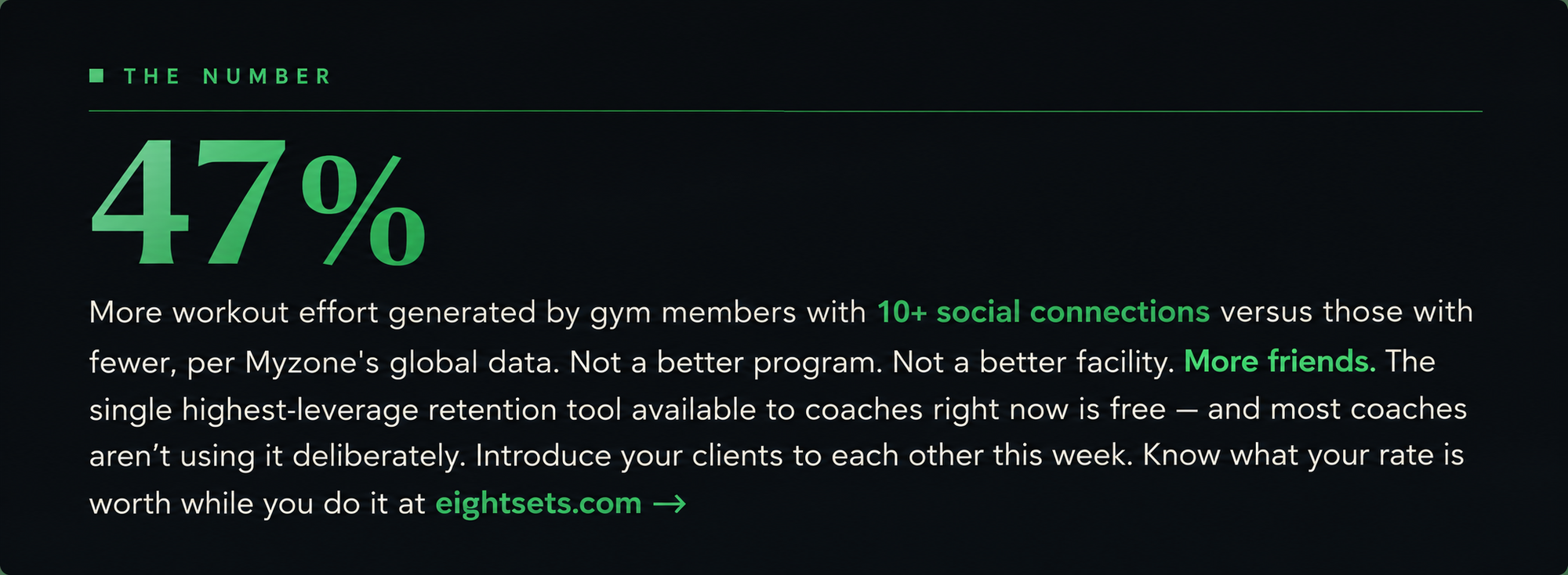
Myzone users average 3.5 workouts per week — widely considered the threshold where exercise becomes habitual rather than occasional. The social finding is the most interesting: members with more than 10 social connections in the Myzone app generate 47% more workout effort than those with fewer. Connection drives effort. Not programming, not periodization, not the quality of your VO2max protocol. Who your client trains alongside — or even just knows is watching — determines how hard they work more than almost anything else you can control as a coach.
Sleep Is Now a Training Variable. Coaches Who Ignore It Are Programming Blind.
The sleep technology market was worth $18.7 billion in 2025. It's projected to reach $67.4 billion by 2035 — a 13.7% annual growth rate that outpaces almost every other wellness category. That's not a niche trend. That's a mainstream behavioral shift toward treating sleep as an active health variable rather than passive downtime.
The new model is closed-loop. As Fitt Insider reported, platforms like Sleep.ai are moving beyond tracking into active intervention — sleep measurement, coaching, and recovery intelligence feeding directly into workout programming, nutrition timing, and daily decisions. Oura, Whoop, and Google Health have all shifted from trackers to virtual health coaches. New AI-powered headbands from Elemind, Muse, and Somnee are interpreting brain activity during sleep and using it to generate guidance for the following day's training load. The coach who reviews a client's sleep data before designing Tuesday's session is now making a more informed programming decision than the coach who doesn't — regardless of how much more sophisticated their periodization model is.
Member discussion