Luxury Residential Fitness: The Coach Pay Gap Nobody Talks About
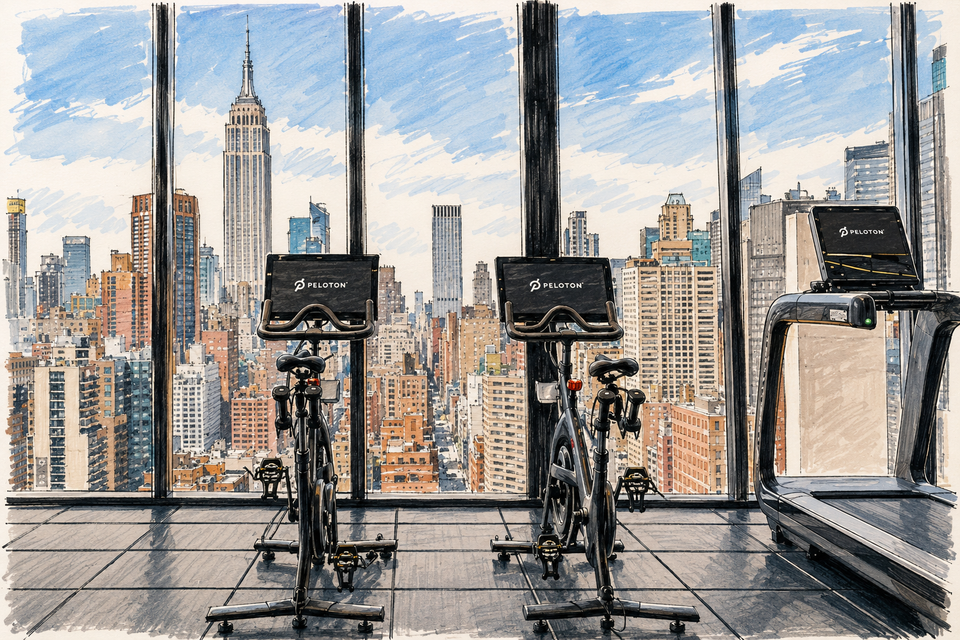
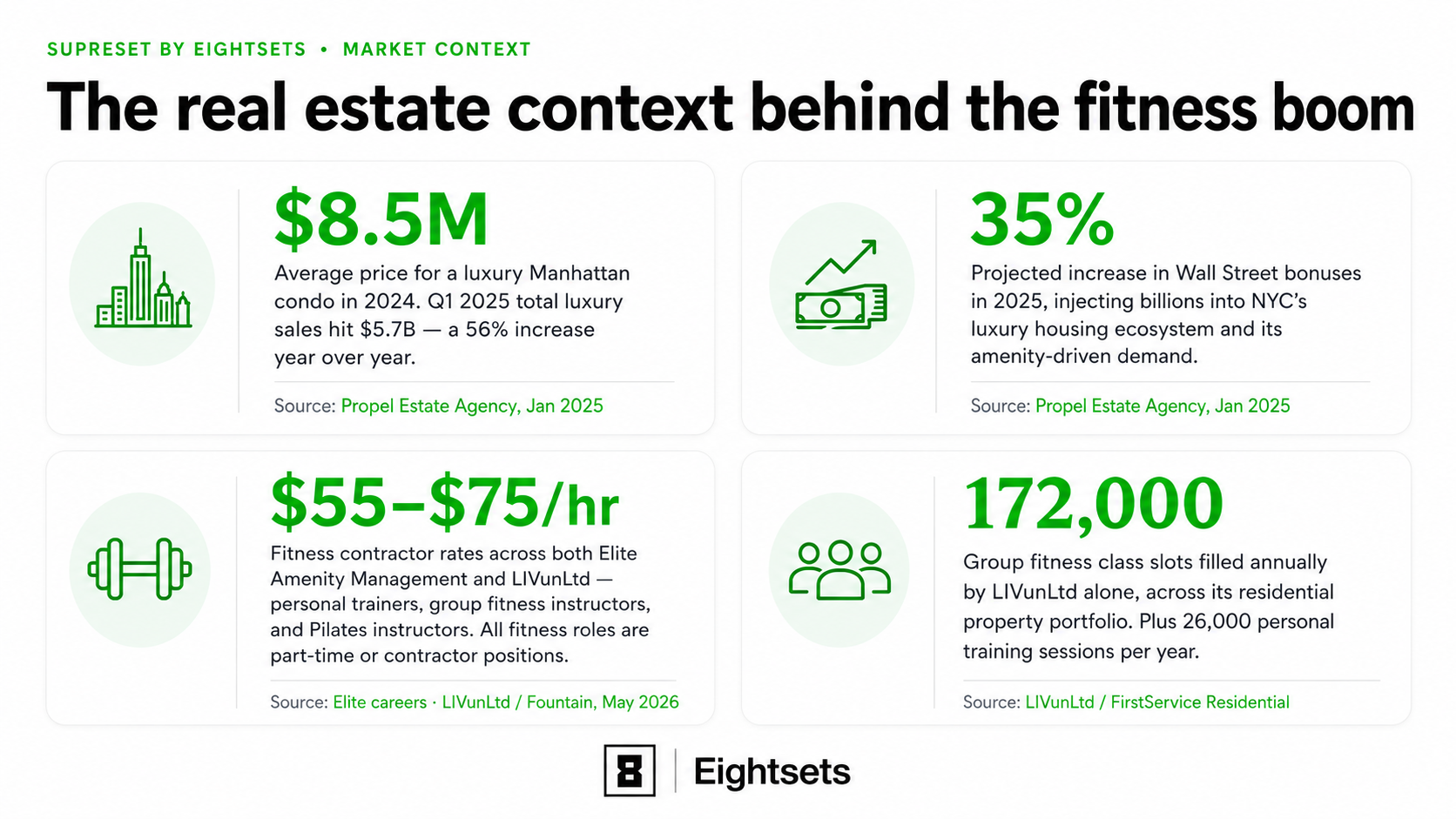
NYC luxury residential buildings now rival boutique studios in equipment, programming, and instruction. The coaches delivering that experience serve residents in apartments averaging $8.5 million. The amenity management companies between the developer and the coach set pay through contracts nobody publishes, and coaches inside these buildings have no benchmark to push back with.
There is a building on 57th Street in Manhattan where residents paid an average of $8.5 million for their apartments and have access to a wellness floor that most boutique fitness studios in New York cannot match. The fitness amenities in luxury residential buildings in NYC now include private spas, cold plunge pools, meditation rooms, saltwater pools, and fully programmed group fitness schedules delivered by certified instructors. The personal trainers available to residents are not gym-floor staff. They are credentialed coaches with experience in strength, Pilates, yoga, nutrition, and recovery modalities, the same professionals who would charge $80 to $150 per session at a premium boutique studio.
The luxury residential fitness amenity boom in NYC is real, it is accelerating, and it is creating a workforce of fitness professionals serving the wealthiest residential clients in one of the most expensive cities in the world. The rates those coaches earn are competitive on paper. Whether they reflect what the market should actually pay — at that building tier, for that client demographic, in that neighborhood — is a question nobody has clean data to answer.
That gap — between the real estate wealth being served and the compensation being paid to the coaches serving it — is the story this article covers. It connects to the same structural dynamic Superset documented in the corporate fitness pay gap: a vendor layer sitting between the property owner and the fitness professional, setting compensation through a management contract the coach never sees, in a market with no public benchmark to measure against.
The players here are different. The building is different. The client is different. The information gap is identical.
■ What Luxury Residential Buildings Are Building — and Why It Matters for Fitness Professionals
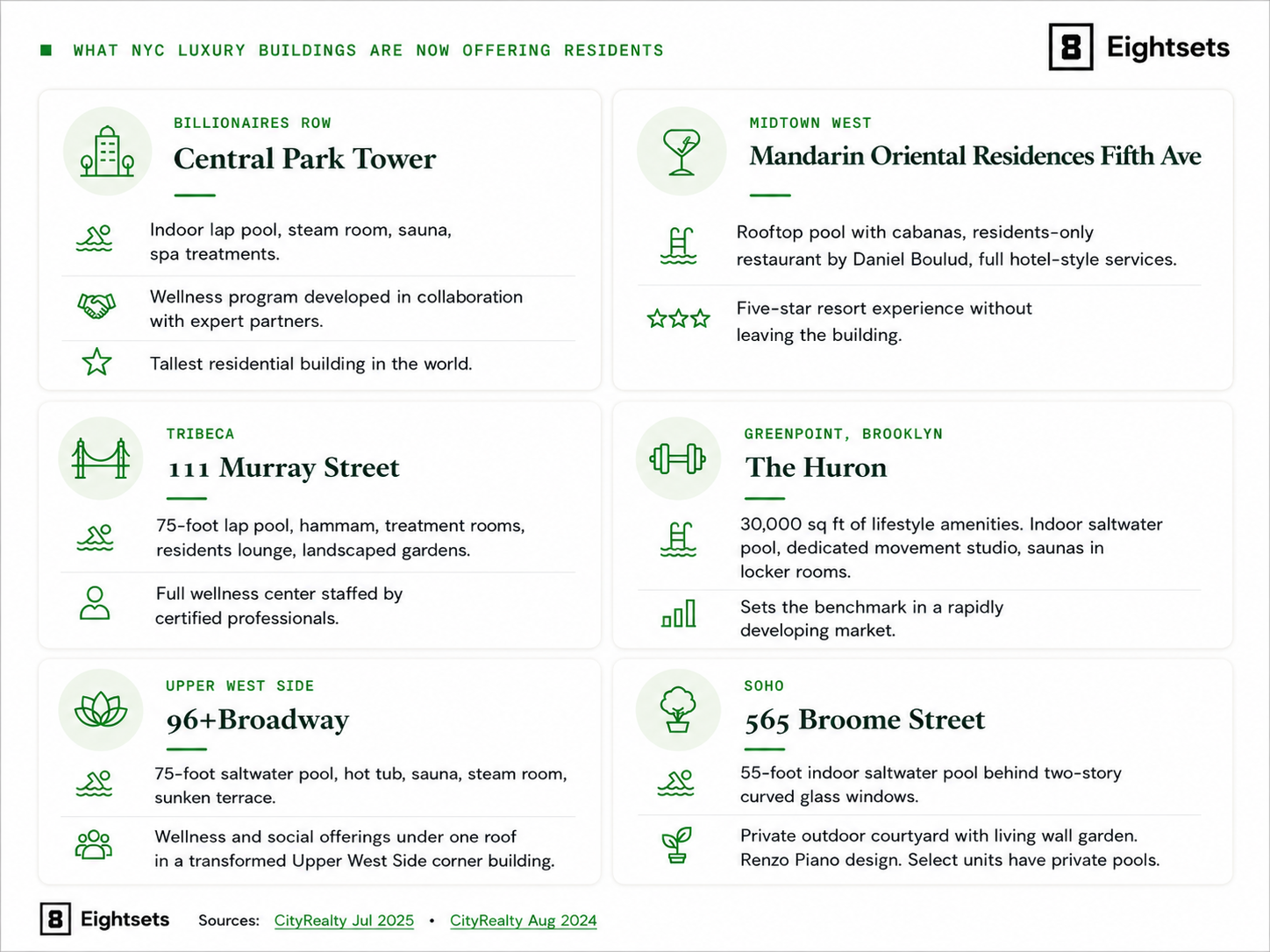
A decade ago, a well-equipped gym on the second floor of a luxury condo building was a checkbox on the amenity list. Residents noticed it during the tour, appreciated it in theory, and occasionally used it. That era is over. Today, in-building fitness programs in NYC have become one of the most consequential differentiators in the luxury residential market.[1]
The shift is from amenity as asset to amenity as experience. Developers competing in a market where luxury sales rose 56% in Q1 2025 alone understand that a saltwater pool and a meditation room are no longer differentiators. They are expectations. What differentiates a building now is the operational quality of what happens inside those spaces — and that means the coach who shows up every morning, knows residents by name, and runs programming that actually gets used.[2]
On-demand personal trainers are now standard in many luxury buildings, alongside private wellness centers with spas, saunas, steam rooms, and treatment suites. Round-the-clock concierge services coordinate fitness bookings alongside restaurant reservations and theatre tickets.[3] The residential fitness experience being sold to buyers at $8.5 million per unit is, functionally, a private club membership built into the building.
That infrastructure requires coaches. Credentialed, experienced, consistent coaches who can serve a client base with high expectations and the resources to act on them. The market has responded by building an amenity management industry to staff and operate these facilities. That industry is the subject of this article.
■ The Amenity Management Layer: LIVunLtd, Elite, and NFC
Most luxury residential buildings do not hire fitness coaches directly. They hire amenity management companies to recruit, train, staff, and operate their wellness facilities. This is the vendor layer that sits between the developer's investment and the coach's paycheck — and it operates with almost no public transparency around what coaches inside it actually earn.
Three companies dominate this space in NYC and nationally. Each has a different ownership structure, a different market position, and a different pay profile for the coaches they employ. What they share is a business model built on the managed services structure: the building pays the operator a management fee, the operator pays the coaches, and the coaches have no visibility into either the fee or the margin being taken between them.
LIVunLtd is the most significant player in the NYC residential amenity space. The company was formed when fitness operator American Leisure merged with Abigail Michaels Concierge, creating what it describes as the most authentic single-source amenity solution in the market. LIVunLtd is now part of The Amenity Collective, a strategic partner of FirstService Corporation — one of the largest property management companies in North America, managing more than 9,000 communities.[4] The institutional backing behind LIVunLtd is significant. It operates at nearly 100 facilities, employs more than 150 certified group fitness instructors and personal trainers, and facilitates 26,000 personal training sessions and 172,000 group fitness class slots annually.
Elite Amenity Management was founded in 2006 by Queens natives Andrew Meditz and Michael Zuchelli and has grown into one of the most recognized names in NYC and South Florida luxury amenity services. Elite has 70 commercial clients and 750 dedicated employees, with services spanning pool management, fitness, luxury concierge, turnkey construction and design, event planning, and a proprietary ELITE App for mobile scheduling and community connection. Its client roster skews toward the luxury residential and private club market that defines the most exclusive addresses in both cities.[5]
NFC Amenity Management describes itself as the nation's largest luxury amenity service provider. With a portfolio representing 350 or more of the top brands in luxury residential and hotels across 30 markets in the US, NFC operates at a national scale that neither LIVunLtd nor Elite matches. Its current hiring activity includes a Residential Lifestyle and Fitness Director role in Manhattan at $75,000 — a salary that represents the ceiling of the management tier, not the coaching floor.[6]
■ What Coaches Inside These Buildings Actually Earn — and Why the Answer Is More Complicated Than It Looks
The pay picture inside residential amenity management is more nuanced than the company-wide salary averages suggest — and understanding that nuance is important for any coach considering this path. Until now, LIVunLtd's fitness pay rates were not publicly available. Job postings on the Fountain platform, shared directly, reveal them for the first time.
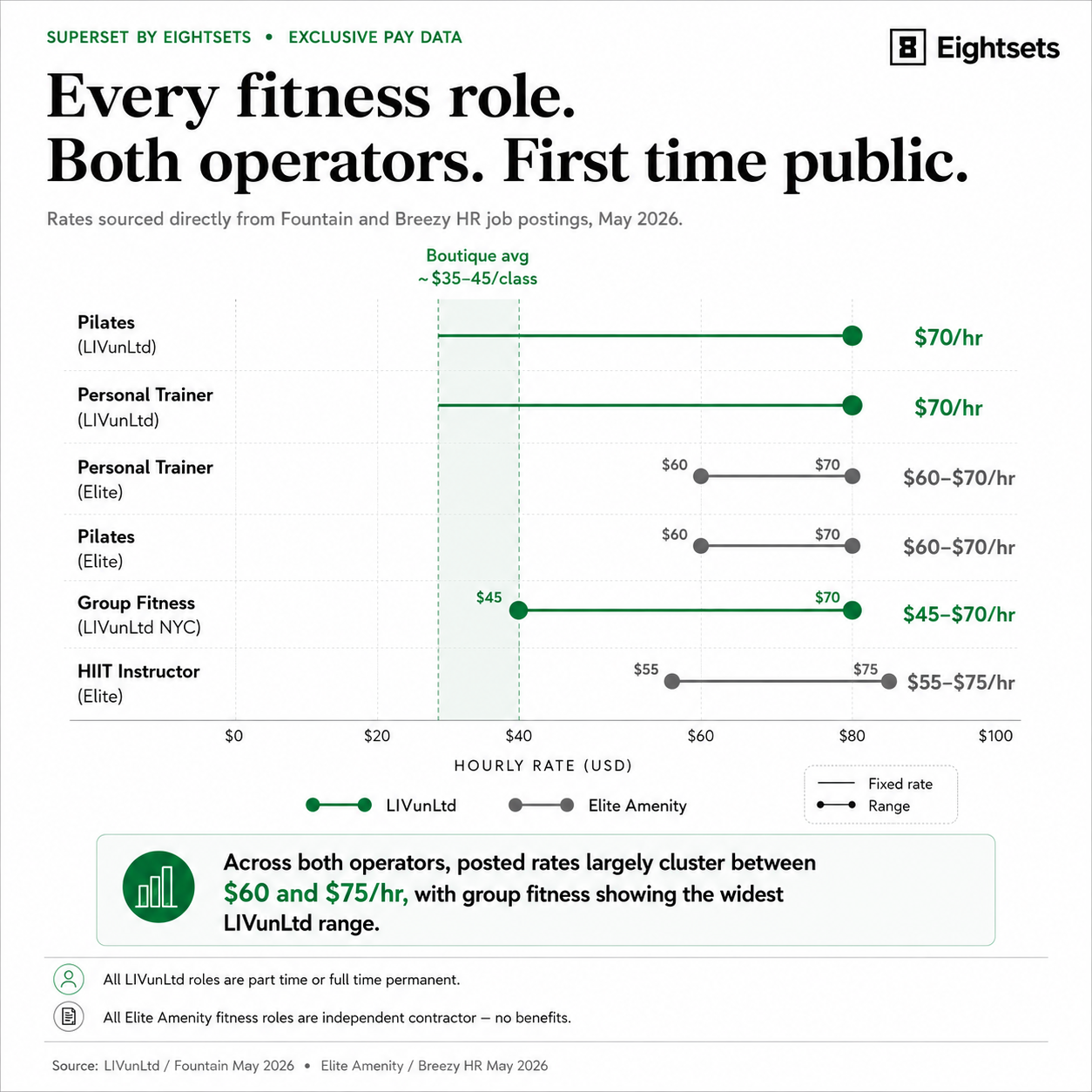
LIVunLtd is currently hiring Group Fitness Instructors in New York City at $45 to $70 per hour, and in Queens at $70 per hour flat. Pilates Instructors in New York are posted at $70 per hour as a full-time permanent position — the strongest employment classification in the dataset. Personal Trainers are posted at $70 per hour part time. LIVunLtd does not publish these rates on its main website. The Fountain platform postings are the only public source for this data.
Elite Amenity Management's active job postings tell a similar story. Personal trainers at Elite are currently being hired at $60 to $70 per hour as independent contractors, with a per-session rate of $50 to $70.[7] Pilates Reformer instructors are offered $60 to $70 per hour.[8] HIIT instructors in New York are posted at $55 to $75 per hour.[9]
Taken together, the two largest residential amenity operators in NYC are paying fitness professionals between $45 and $75 per hour depending on role, format, and location. Those are genuinely competitive rates — comparable to boutique studio coaching in NYC, and in some cases stronger than what boutique per-class rates deliver for the same format.
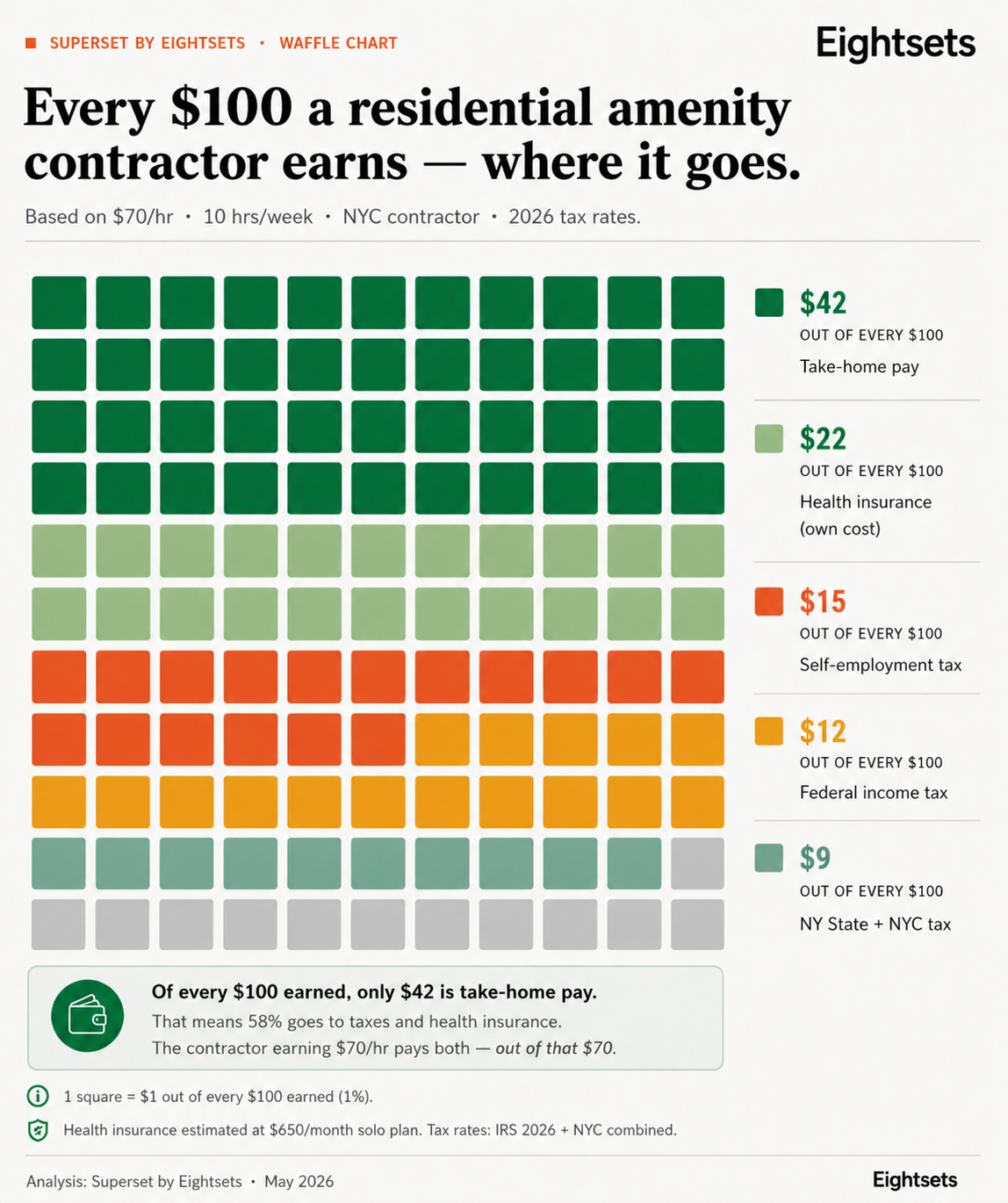
Here is where the story gets more complicated. Every fitness role in Elite's current postings is classified as an independent contractor position. That distinction matters enormously. W-2 employees at Elite receive the benefits listed on the company's careers page — paid time off, sick days, health insurance, a 401k with employer match, parental leave, and a manager training program. The contractors earning $55 to $75 per hour receive none of that. No benefits. No guaranteed hours. No income stability between building contracts. No employer-side payroll tax contributions.
The practical effect is a two-tier workforce operating inside the same amenity management company. Support staff are W-2 employees earning $17 to $18 per hour with benefits and institutional stability. Fitness professionals are independent contractors earning $55 to $75 per hour with none of that safety net, and with income that depends entirely on which building contracts Elite holds and how many resident sessions those buildings generate.
Neither tier has a public benchmark for their specific role at comparable buildings. The W-2 support employee cannot verify whether $17 per hour is fair relative to equivalent roles at LIVunLtd or NFC. The contractor personal trainer cannot compare their $60 per hour against what a comparable trainer earns at a LIVunLtd property of similar tier in the same neighborhood. That information gap applies to both tiers, for different reasons, with different consequences.
NFC Amenity's pay range is the widest in the sector, from $14.69 per hour for seasonal associates up to $54.29 per hour for yoga instructors, with an average annual salary range of $30,000 to $76,626.[10] That breadth reflects the same structural reality as Elite: a wide range of roles under one operator umbrella, with fitness professionals at the high end and support and seasonal roles at the low end. The absence of a public breakdown by role, employment type, and property tier means coaches inside NFC's network face the same benchmark problem.
At the management level, fitness director salaries in 2025 range broadly between $60,000 and $100,000 or more, with larger luxury-focused facilities at the top of that band.[11] NFC's current Residential Lifestyle and Fitness Director posting in Manhattan sits at $75,000 — a W-2 role with full benefits at the top of the organizational chart for a single building.
"Elite's fitness contractors earn $55 to $75 per hour — competitive rates by any measure. But they are contractors. No benefits. No guaranteed hours. No stability between building contracts. The hourly rate and the employment security are two different conversations."
■ The Boutique Brand Infiltration — A New Model Emerging
The amenity management story has a new chapter that is worth watching separately. Premium boutique fitness brands are beginning to embed directly into luxury residential developments, bypassing the amenity management layer entirely and creating a different economic structure for the coaches inside those buildings.
Chelsea Piers Fitness recently signed a lease inside TF Cornerstone's newest Midtown East office-to-residential conversion — a 32-story tower that will bring more than 350 market-rate and affordable apartments alongside Chelsea Piers Fitness training, recovery, and social spaces. Chelsea Piers Fitness chief operating officer Sam Bernstein described the move as part of a growth strategy focused on the right neighborhoods, spaces, and partners.[9]
Chelsea Piers is not alone. JetSet Pilates, Studio Three, Revel, and Peloton have all adopted versions of the same strategy — expanding through luxury and mixed-use real estate partnerships rather than standalone studio leases. The economics are different from the amenity management model. These are brand-operated facilities within residential developments, not management contracts. The coaches inside them are employed by the fitness brand, not by a third-party amenity operator. The pay structure follows the brand's standard compensation model rather than a building-specific management fee.
Whether that translates to better pay for coaches depends entirely on which brand and what their standard compensation looks like. But it introduces a direct comparison that the amenity management operators will eventually have to respond to. If a coach can work at a Chelsea Piers Fitness inside a residential building and earn more than they would at an amenity management operator in the same building, the labor market for residential fitness talent shifts.
■ The Eightsets Case: Why Residential Amenity Is the Most Important Data Gap in Fitness
Every segment Superset has covered has a version of the same information gap at its center. Boutique fitness coaches have no benchmark for per-class rates. Corporate fitness coaches at Plus One have no data to evaluate their salary against comparable operators. Certification bodies benefit from coaches not knowing what their credential investment returns in actual pay.
Residential amenity fitness is the most acute version of that gap — and the most consequential to close — for a specific reason. The clients being served in these buildings represent the top of the NYC income distribution. They are the same demographic that sustains Equinox, SoulCycle, and the premium boutique fitness market. When a coach serves that demographic through an amenity management operator, they lose the direct market signal that would otherwise inform their pricing. They cannot charge more because they do not set the rate. They cannot negotiate because they have no benchmark. They cannot compare their pay because the information does not exist publicly.
A contractor personal trainer at Elite Amenity Management earning $60 per hour in a luxury residential building in Tribeca is delivering a premium service to a premium client in one of the most expensive real estate markets in the world. That $60 per hour is competitive on its face. What it does not tell the coach is whether $60 is the market rate or the floor, whether a comparable trainer at a LIVunLtd property two blocks away earns more or less, or whether that rate will hold when Elite renews its contract with the building next year. Those are the questions that require a benchmark. And that benchmark does not exist.
That is the information gap Eightsets is built to close. Compensation data from residential amenity coaches, broken down by operator, building tier, neighborhood, and role, creates the first public benchmark this corner of the industry has ever had. It does not change the managed services structure overnight. But it gives coaches the independent reference point that the vendor layer currently denies them, and it gives the industry the data to have an honest conversation about whether the premium being charged for luxury residential fitness is reaching the coaches, making it possible.
If you work in residential fitness at a luxury building through LIVunLtd, Elite Amenity, NFC, or any managed operator, your compensation data does not appear in any public benchmark.
Submit anonymously at eightsets.com.
Two minutes. Your data stays private.
The benchmark only becomes useful when residential amenity is in it.
■ What to Watch
Whether boutique brand infiltration pressures amenity management pay. As Chelsea Piers Fitness, JetSet Pilates, and other premium brands embed into residential developments, amenity management operators face a direct labor market comparison for the first time. If coaches can earn more working for a brand-operated facility inside a residential building than through a management operator in the same building, the operators will need to respond. Watch for compensation changes at LIVunLtd and Elite over the next 12 to 18 months.
Whether NYC's luxury real estate market sustains its current trajectory. The residential fitness amenity boom is a downstream consequence of a hot luxury real estate market. Wall Street bonuses up 35% and 58% of ultra-luxury transactions completed in cash describe a market at or near its peak cycle. If that market softens, developers competing on amenity quality face budget pressure, and amenity management contracts are among the most renegotiable line items in a building's operating costs. Coaches are the first to feel that pressure.
Whether Mamdani's tax proposals affect the residential client base. Superset covered this directly in The Client Flight Risk. The residents of $8.5 million condos are precisely the population targeted by the proposed income surcharge. If behavioral changes in that demographic begin affecting how often residents engage with building amenities, the amenity management operators will see it in utilization data before anyone else. Watch for programming reductions or staffing cuts at luxury residential facilities as a leading indicator.
Eightsets residential amenity data. As submissions from residential fitness coaches grow, Superset will publish the first public pay analysis for this segment, by operator, building tier, and NYC neighborhood. The coaches serving the wealthiest residential clients in the country deserve to know what that service is worth in the open market. Building that benchmark is what Eightsets is for.
Sources & references
- [1]How In-Building Fitness Programs Are Changing the Value Proposition for NYC Luxury Residential Developers — Performance Lab NYC, Mar 2026
- [2]Amenities Arms Race: How Manhattan's New Developments Are Redefining Luxury in 2025 — New Construction Manhattan, Apr 2025
- [3]What Makes NYC's Luxury Condos Stand Out in 2025 — LeadingRE / Destinations, 2025
- [4]The Amenity Collective — LIVunLtd and American Pool — FirstService Residential New York
- [5]Elite Amenity Management Average Salaries and Company Profile — Salary.com, 2025 (70 clients, 750 employees, $49,588 avg annual)
- [6]NFC Amenity Management Residential Lifestyle & Fitness Director — ZipRecruiter, Manhattan NY ($75,000)
- [7]Personal Trainer | Astoria/LIC — Elite Amenity Management careers, May 2026 ($60–$70/hr, independent contractor)
- [8]Pilates Reformer Instructor | Astoria/LIC — Elite Amenity Management careers, May 2026 ($60–$70/hr, independent contractor)
- [9]HIIT Instructor | New York — Elite Amenity Management careers, May 2026 ($55–$75/hr, independent contractor)
- [10]Group Fitness Instructor | Queens NY — LIVunLtd / The Amenity Collective via Fountain, May 2026 ($70/hr, part time)
- [11]Group Fitness Instructor | New York NY — LIVunLtd / The Amenity Collective via Fountain, May 2026 ($45–$70/hr, part time)
- [12]Personal Trainer | Asbury Park NJ — LIVunLtd / The Amenity Collective via Fountain, May 2026 ($70/hr, part time)
- [13]Pilates Instructor | New York NY — LIVunLtd / The Amenity Collective via Fountain, May 2026 ($70/hr, full time, permanent)
- [10]NFC Amenity Management Salaries — Indeed.com (3,009 data points; $14.69–$54.29/hr range)
- [11]Fitness Director Salary and Compensation Guide 2025 — IDEA Health & Fitness Association ($60K–$100K+ range)
- [12]Chelsea Piers Fitness Signs Lease for New Location in NYC's Midtown East — Athletech News, Nov 2025
- [13]NYC's Luxury Real Estate Renaissance 2025 — Propel Estate Agency ($8.5M avg condo price; 56% sales increase; 35% Wall Street bonus growth)
- [14]Elite Amenity Management Hourly Pay Rate — Salary.com ($21–$27/hr company-wide avg; all roles including support staff)
- [15]Saltwater Pools: 20 Buildings That Embrace the New Luxury Amenity in NYC — CityRealty, Jul 2025
- [16]Top 20 New Development Condos With Saunas and Spas — CityRealty, Aug 2024
- [17]Luxury High-Rises Level Up Their Fitness Amenities — Athletech News, Apr 2026 (LIVunLtd, Naftali Group, NYC wellness real estate)
- [18]Fitness Manager Salary — New York City, NY — Glassdoor, Dec 2025 ($86,570 avg; $68K–$112K range)
Member discussion